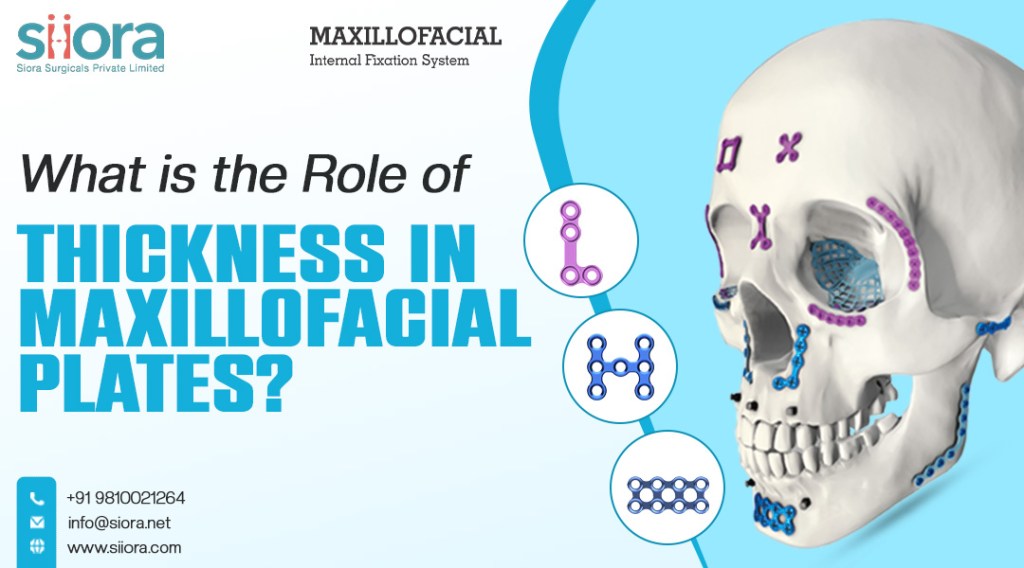
In maxillofacial surgery, plates are used to stabilize fractured bones in the face and jaw. While material and design often get attention, the thickness of the maxillofacial plates is just as important. It directly affects how well the implant supports the bone during healing.
Thickness is not just a technical detail. It plays a practical role in how the plate behaves once it is fixed in place.
Why Thickness Matters in Plate Selection?
The thickness of a maxillofacial plate determines its strength and flexibility. A thicker plate is generally stronger and can handle higher loads. This makes it useful in areas where chewing forces are high, such as the mandible.
On the other hand, thinner plates are more flexible. They are easier to adapt to the bone surface and are often preferred in delicate areas like the midface, where excessive rigidity is not required.
Choosing the right thickness is about finding a balance between stability and comfort.
Load Bearing vs Load Sharing
One key factor that guides plate thickness is whether the plate will act as a load-bearing or load-sharing device.
In load-bearing situations, such as comminuted fractures, thicker plates are often used. These plates take on most of the functional load because the bone cannot support it on its own.
In load-sharing cases, where the bone fragments are well-aligned, thinner plates are usually enough. Here, the bone and plate work together to handle stress, which supports natural healing.
Effect on Bone Healing
Plate thickness can also influence how the bone heals. Very rigid, thick plates may reduce micromovement at the fracture site. While this can provide strong fixation, it may sometimes slow down the natural healing process.
Thinner plates allow slight movement, which can encourage callus formation. This is often helpful in secondary bone healing. However, if the plate is too thin, it may not provide enough stability.
This is why surgeons carefully assess the fracture type before deciding on plate thickness.
Surgical Handling and Adaptation
From a practical point of view, thinner plates are easier to bend and shape during surgery. This helps in achieving a better fit along the contours of facial bones. A well-adapted plate reduces soft tissue irritation and improves overall comfort.
Thicker plates, while stronger, can be harder to contour. They may require more effort during placement and can sometimes feel bulky under the skin, especially in areas with less soft tissue coverage.
Finding the Right Balance
There is no single “ideal” thickness for all cases. The choice depends on several factors, including fracture location, bone quality, and functional demands. Surgeons often rely on their experience along with clinical guidelines to make this decision.
In many cases, using the minimum thickness required for stability is preferred. This approach supports healing while reducing unnecessary trauma implant bulk.
Conclusion
The thickness of maxillofacial plates is a key factor in successful fracture management. It influences stability, healing, and patient comfort. By selecting the right thickness based on the clinical situation, surgeons can achieve better outcomes and smoother recovery for their patients.
 siiora surgicals pvt. ltd