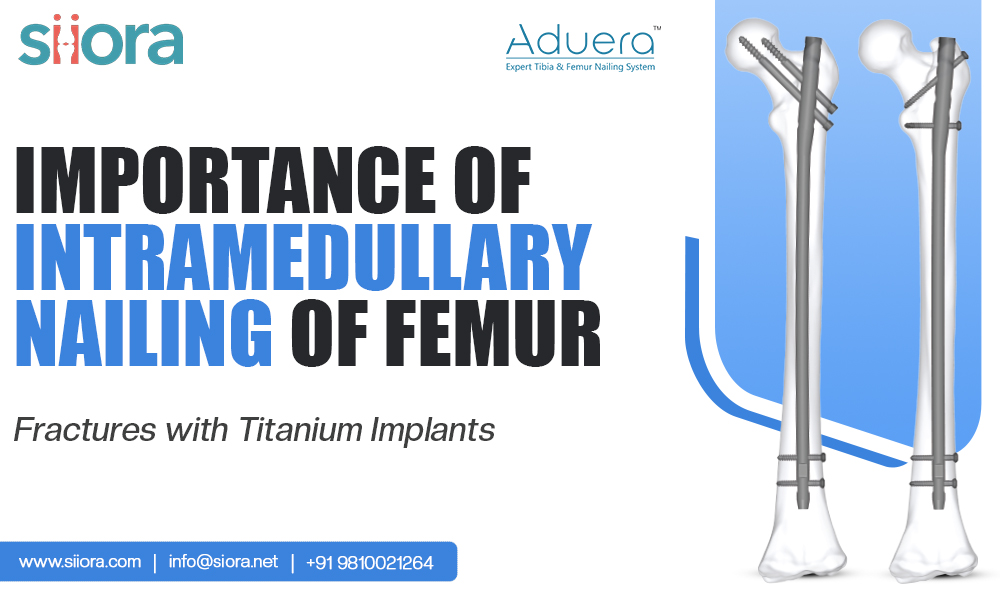
The femur, or thigh bone, is the strongest and longest bone in the human body. Because it carries most of the body’s weight during movement, a fracture in this bone is considered a serious injury. Femur fractures often occur due to road accidents, sports injuries, or high-impact trauma. In elderly patients, weaker bones caused by osteoporosis can also lead to such fractures even after a fall.
Treating these fractures properly is important because the femur plays a major role in standing, walking, and maintaining balance. Orthopedic surgeons usually recommend surgical treatment using an expert nail for most femoral shaft fractures to restore alignment and allow early mobility.
What Is Intramedullary Nailing?
Intramedullary nailing is a surgical technique widely used for stabilizing long bone fractures, especially those of the femur. In this procedure, a specially designed metal rod called an intramedullary nail is inserted into the hollow center of the bone. The nail runs along the inner canal of the femur and helps keep the fractured pieces aligned during healing.
Locking screws are placed at both ends of the nail to prevent rotation and movement of the bone fragments. Because the implant sits inside the bone, it provides strong internal support without disturbing the surrounding muscles too much.
Why Titanium Implants Are Commonly Preferred?
Intramedullary nails can be made from different materials, but titanium has become a preferred choice in many orthopedic procedures. One reason is its excellent compatibility with the human body. Titanium implants are generally well tolerated and rarely cause reactions in surrounding tissues.
Another advantage is that titanium is lighter and slightly more flexible than some other metals used in orthopedic implants. This flexibility allows the implant and bone to share the load during movement. As a result, the healing bone continues to experience natural stress, which can help stimulate bone formation.
Benefits for Fracture Stability and Healing
Using titanium intramedullary nails offers reliable stability for femoral fractures. Because the nail is placed inside the bone canal, it aligns with the natural mechanical axis of the femur. This position helps distribute weight evenly and supports early weight-bearing in many patients.
Titanium implants also allow a small amount of controlled movement at the fracture site. While this movement is minimal, it can encourage callus formation, which plays an important role in bone healing. This feature is particularly helpful in patients with reduced bone quality.
Faster Recovery and Improved Mobility
One of the biggest advantages of intramedullary nailing is the possibility of early rehabilitation. Since the fixation is strong and stable, patients can begin gentle movement sooner than with many other treatment methods. Early mobility helps reduce complications such as joint stiffness, muscle weakness, and prolonged bed rest.
Titanium implants also produce fewer imaging disturbances during follow-up examinations. This allows doctors to clearly evaluate fracture healing using X-rays or other imaging methods.
Conclusion
Intramedullary nailing has become a widely accepted method for treating femur fractures because it provides strong internal support while preserving surrounding tissues. When combined with titanium orthopedic implants, the technique offers additional benefits such as improved biocompatibility, balanced load sharing, and better support for natural bone healing. For these reasons, titanium intramedullary nails continue to play an important role in modern orthopedic fracture management.
 siiora surgicals pvt. ltd